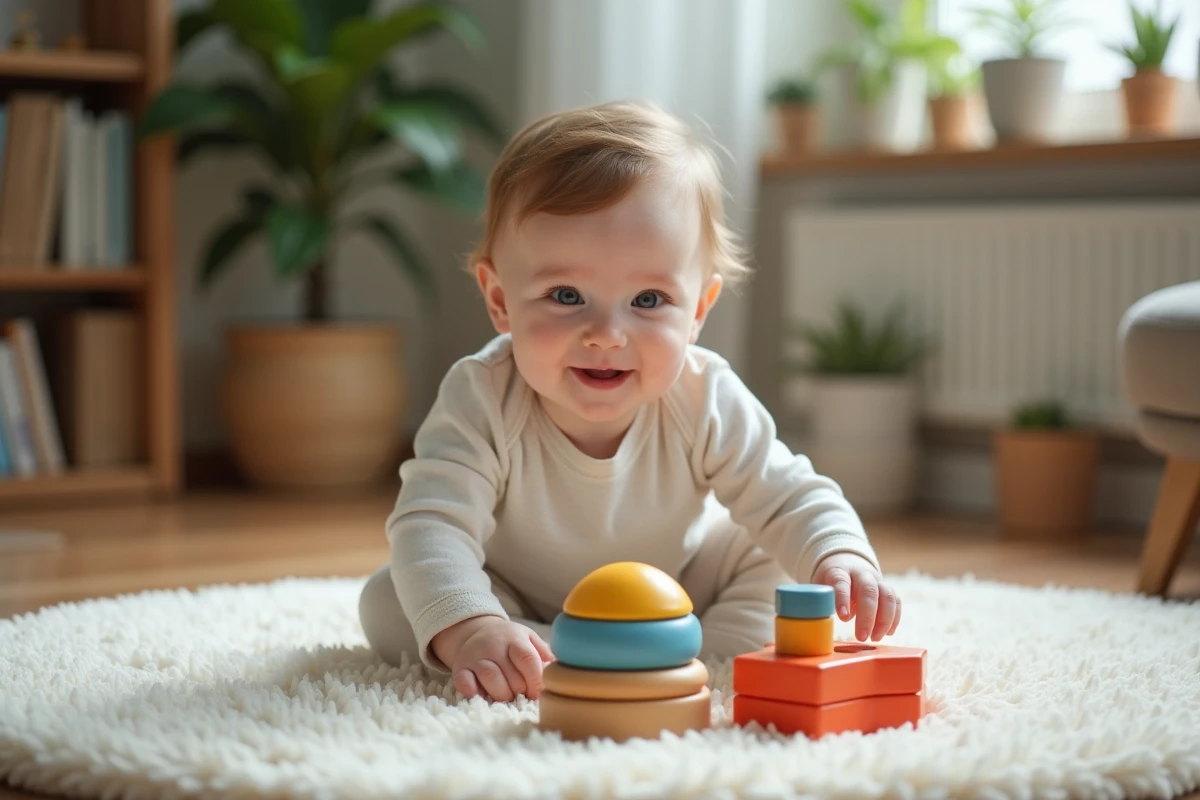
A newborn can sleep up to 18 hours a day, but the construction of brain connections mainly occurs during active wakefulness. Contrary to popular belief, the absence of sophisticated toys does not hinder sensory or motor development. In some contexts, attentive interaction is more than enough to support the child’s progress.
This may come as a surprise: each baby charts their own path. Some first absorb the world through sound, captivated by the slightest noise, while others seek to touch and grasp from the very first days. Their rhythms vary, as do their desires, and it is futile to try to standardize everything.
Understanding the fundamental needs of your baby for harmonious awakening
The development of the infant builds step by step. Nothing is more precious than a secure environment rich in appropriate stimuli. The first bonds are woven in closeness, in contact, with each hug and each tender gesture laying the foundations of attachment. This trust, born from the feeling of security, opens the door to discovering the world. It is impossible to dictate a baby’s rhythm. Whether they sleep 18 hours a day or demand a bottle at dawn, it is essential to follow their needs. For feeding, the guidelines are clear: exclusive breastfeeding until 6 months as recommended by WHO, or formula milk as a substitute. After one year, growing-up milk meets specific needs, particularly for iron, fatty acids, and vitamins. Maintaining a stable routine helps the child feel secure. Too much stimulation can quickly overwhelm them. Favor simplicity: hand games, songs, exchanged glances are often enough to awaken their curiosity. Daily care, proper hygiene, and a healthy space are equally crucial for their well-being. Many parents share their experiences on Vive Mon Bébé, a treasure trove of ideas and feedback for the early years. Language and emotional management are nourished by everyday relationships. Talk to them, name what surrounds them, take the time to listen to their cries without trying to soothe everything with a gesture. Let their curiosity express itself without pressure, offering them the space to explore and manipulate at their own pace.
What playful activities to prioritize according to your child’s age?
Diversifying stimuli does not mean accumulating everything. Above all, observe them: their needs change quickly, and each stage calls for appropriate games. During the first weeks, sensory games take center stage: play mats, lightweight rattles, black and white mobiles. These simple objects attract attention without overwhelming the child. Motor skills awaken on the floor: let them move freely, grab, and touch. Massage, given by a parent, is among the best tools to help them discover their body while strengthening the bond and comforting them. From six months, curiosity sharpens. Stacking cubes, soft books, fabric or plastic balls offer different textures and colors to explore. These games help develop fine motor skills and hand-eye coordination. It’s time for music, sounds, and nursery rhymes: voices, songs, maracas awaken the ear and nourish the first approach to language. The book becomes a companion for all moments, to be handled, chewed, opened, and closed at leisure. By one year, the desire for autonomy is felt. Pushing or pulling toys, walking carts accompany the first hesitant steps. Imitation games, miniature phones, dolls, small cars, open the way to imagination. But too many toys kill discovery: a calm space, a few well-chosen objects, and the presence of an attentive adult often make all the difference.
Small daily tips to encourage curiosity and reassure parents
To promote exploration, sometimes little is needed: a comfortable corner, a few age-appropriate objects, a blanket, rattles, cardboard books. Let them go at their own pace, touch, and manipulate. This exploration nourishes curiosity and builds trust. Maintaining a stable space, without excess, helps to calm them and structure their days.
The daily routine stabilizes the family rhythm. Meals, diaper changes, naps: repeating gestures, announcing each key moment with voice or a smile, provides solid reference points. This kind communication strengthens the parent-child bond. The small bedtime rituals, soft light, whispered songs, transform the end of the day into a reassuring moment.
Paying special attention to care and hygiene goes beyond technique. A bath given gently, enveloping gestures, reassure the child. Choosing products from organic farming certified by Ecocert reflects the desire to act with kindness and to preserve the environment, today and tomorrow.
Here are some gestures to prioritize to accompany your baby in their discoveries:
- Physical contact remains a pillar: hugs, carrying, massages, nothing replaces human warmth.
- Give moments of individual support, away from digital distractions.
- Vary the diet according to growth stages: breast milk, formula milk, or growing-up milk, following WHO recommendations.
Over time, attentive observation of the child’s reactions allows for adjustments in gestures and activities. Present, listening parents, but without imposing, become the discreet guides of this adventure where security, autonomy, and discovery go hand in hand. Awakening happens every day, in nuance and shared trust.