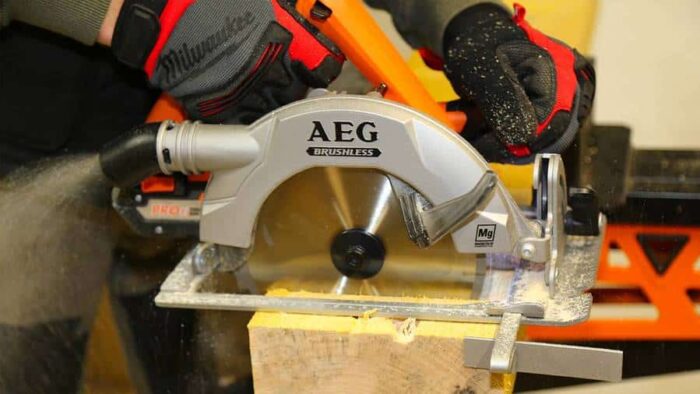
To ensure your circular saw is effective, it must be equipped with a good blade. Choosing the blade for your circular saw can be quite a puzzle, given the many models available on the market. Here are the main criteria to consider when finding the right blade for your circular saw.
The intended use of the saw
The circular saw is used to cut various types of materials. Therefore, it is essential to choose the blade based on the material to be cut. For example, to cut solid wood, opt for a blade with a negative rake angle. Conversely, for cutting wood embedded with nails, use a circular saw equipped with a nail-cutting blade. Moreover, a blade with many teeth is perfect for finishing cuts, while a blade with fewer teeth is suitable for rough cutting of wood. For wood derivatives such as plywood, fiberboard, laminate, or melamine, choose the best circular saw 2020 equipped with an alternate bevel blade.
The type of tooth design of the blade
The type of tooth design of a circular saw blade determines the quality of the cut. On the market, there are 5 main types of circular saw blade tooth designs: negative rake, alternate bevel, trapezoidal, nail-cutting, and anti-kickback teeth. The negative rake design consists of teeth angled backward. With this type of blade, the work is completely safe, as the risk of the blade being pulled towards the operator is greatly reduced. The alternate bevel design, on the other hand, features teeth beveled alternately to the right and left on their upper part. Circular saw blades with this type of tooth design are versatile.
They allow for various tasks such as rough cutting and finishing work. They are effective in both solid wood and panels. The trapezoidal tooth design is designed for specific cuts. Its reduced rake angle allows for clean and precise cuts. The nail-cutting tooth design is specifically intended for cutting materials with nails. Thanks to its special carbide structure, it absorbs shocks. The anti-kickback design is useful for blades with fewer teeth. Its role is to reduce the amount of material that gets caught between the teeth during cutting, resulting in a clean cut.
The bore and diameter
To find the blade that fits your circular saw, you also need to consider the bore. Ideally, choose a blade with a bore that matches the size of the machine. This ensures the stability of the blade and, consequently, the safety of the operator. As for the diameter of the blade, you need to take into account the maximum diameter of blades that you can mount on the machine. The diameter of the blade must not exceed this specification.
To choose the right blade for your circular saw, you need to consider the type of material to be used, the tooth design of the blade, and also evaluate the bore and diameter of the blade.