
An unsuitable home accelerates the loss of autonomy in elderly people, according to a study published by the CNSA. Falls at home remain the leading cause of accidents in everyday life after the age of 65, while simple adjustments can reduce this risk by half. However, the majority of adaptation requests occur after an incident, rarely in prevention.
Housing professionals recommend intervening upstream, but implementation faces persistent cultural and financial barriers. Assistance programs exist but remain underutilized due to a lack of clear and accessible information.
Aging well at home: an issue of comfort and autonomy
Anticipation is the real challenge. Losing autonomy doesn’t happen overnight: adapting the home gives everyone the chance to maintain control over their daily lives. Sometimes, it all starts with a handle at the right height or a reconfigured bathroom. These seemingly trivial actions protect freedom of movement, limit the risk of falls, and contribute to a real quality of life.
The National Housing Agency plays a key role: technical advice, financial assistance, personalized support… Public programs are available, but one must know how to navigate them. Identifying sensitive points, rethinking access, securing bathrooms, adapting spaces opens up new daily perspectives.
Here are some actions to prioritize for a truly adapted home:
- Secure stairs and pathways.
- Install grab bars in bathrooms.
- Prefer walk-in showers.
Preparing your home for the future is not trivial: it is a conscious choice that combines comfort, safety, and accessibility. To stay comfortably at home longer, it’s best to inform yourself about available assistance and remain attentive to existing programs. Need to go further? Learn more about Maisonea offers a panorama of ideas, practical guides, and testimonials to move concretely towards a home that reflects you.
What adaptations really facilitate daily life?
A home lives and evolves just like its occupants. To improve your daily life, it is important to target the adaptations that make a difference. Sometimes, it’s enough to open a passage, remove an obstacle, or add light where fatigue sets in more quickly. The adaptation of the home benefits from observation: where do we trip? What action proves to be cumbersome? The answers outline the action plan.
The bathroom often concentrates risks. Swap the bathtub for a flat, non-slip shower; choose lever faucets, add a grab bar or a wall-mounted seat. Accidents decrease, autonomy expands. The kitchen also lends itself to evolution: placing utensils within reach, installing pull-out drawers, or adjusting the countertop height makes daily actions easier.
To clarify things, here are some concrete steps to implement:
- Optimize your space: clear pathways, prioritize low storage.
- Illuminate every strategic area: discreet halogen lights, motion detectors, night lights.
An adapted home is not static: it evolves according to your needs, uses, and lifestyle. Betting on modularity with wheeled furniture or movable partitions allows for prolonged conviviality without sacrificing safety. Your habits will guide the most relevant choices for a simpler, safer, and more pleasant daily life.
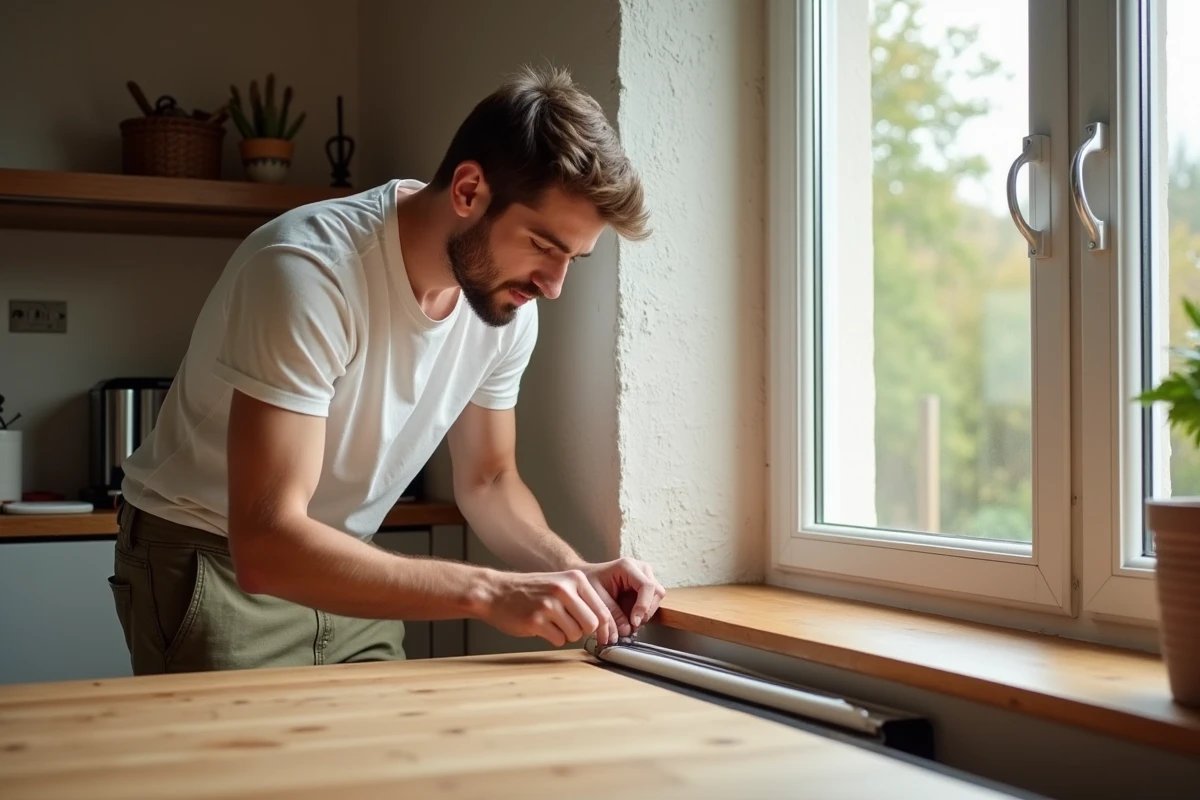
Concrete tips for a safe, practical, and warm home
Creating an interior where one feels good is not a matter of chance. Every detail counts. Multiplying light sources, varying ambiances, focusing on brightness, especially in living areas, instantly transforms the perception of space. Natural light, enhanced by light curtains or glass openings, enlarges the feeling of space. Strategic lamps for reading or creating a soft atmosphere complete the ensemble.
Organization also makes a difference. Clever storage, open shelves, multifunctional furniture, custom closets help declutter, ventilate, and facilitate movement. In the kitchen, every utensil finds its place within reach. In the living room, books and small objects are tucked away in discreet chests.
To warm up the space, favor natural materials, cushions, rugs, and soft textiles. A few carefully chosen objects add meaning to the decor. On the safety side, install smoke detectors, check electrical outlets, and secure access points. These precautions contribute to a reassuring environment.
Here are some principles to remember for an interior that is both practical and warm:
- Your interior should reflect your uses, your story.
- Vary the lighting ambiances for each moment of the day.
- Facilitate access to everyday objects, limit obstacles.
The balance of a successful home lies in freedom of movement, visual harmony, and the ability to adjust each room according to your needs. Observe, listen, adapt: this is how the home remains that unique, welcoming, and lively place where one truly feels at home.