38%: this is the proportion of men who, in 2023, report bending under contradictory social expectations. Ipsos has released the data, and the discomfort is palpable. At the same time, campaigns on men’s mental health are multiplying; on social networks, debates about masculinity are gaining momentum. Between injunctions and conflicting discourses, traditional markers are trembling on their foundations. Nothing is fixed anymore, and each story is constructed in motion.
What shapes masculine identity today?
It is impossible to hide behind an unchanging model: identifying as a man today means juggling with evolving codes. The references of yesterday sometimes persist, but they falter, debated by perspectives from multiple horizons, whether artistic, academic, or associative. Even the male gaze is being dismantled piece by piece, questioned, far from old certainties. Straight lines, established paths: none of that anymore. It’s time for individual exploration, for dialogue about the meaning of the collective.
This evolution makes possible an intimate voice that contrasts with calibrated narratives. A platform has opened where everyone tells their own story and reconstructs their markers, far from any standardization. Among the web spaces for expression, the (wo)menweb site stands out for its diversity of testimonies, welcoming both family transmission stories and raw reflections on masculinity. Here, each voice shapes a moving identity, counter to the single mold.
Culture, society, and well-being: intersecting influences on modern men
As imposed models fade, culture takes on a pioneering role. Through theater, writing, and improvised music, spaces are created to revisit masculine identity without filters. Teachers, educators, and volunteers are changing the game on the ground, multiplying creative initiatives and opening new perspectives.
Artistic expression, once a mere parenthesis, is now rooted in the daily lives of men. Researchers from CNRS and Cnam emphasize this: the social impact of culture is not confined to the private sphere. It also nourishes institutions, fosters the emergence of new solidarities, and connects individual aspirations to collective issues. Responding even to the ecological transformations sweeping through society, these dynamics inject connection into the most unlikely places.
On the ground, several practices testify to this movement:
- Participatory formats designed with residents, to anchor each project in the reality of daily life
- Associations are engaging with schools, providing a breath of creative air to those whose voices have been stifled until now
- Festivals or intergenerational meetings break down barriers, circulating experiences and ideas
Far from wanting to create a new norm, this is about multiplying paths, respecting differences, and giving everyone the space to chart their own trajectory.
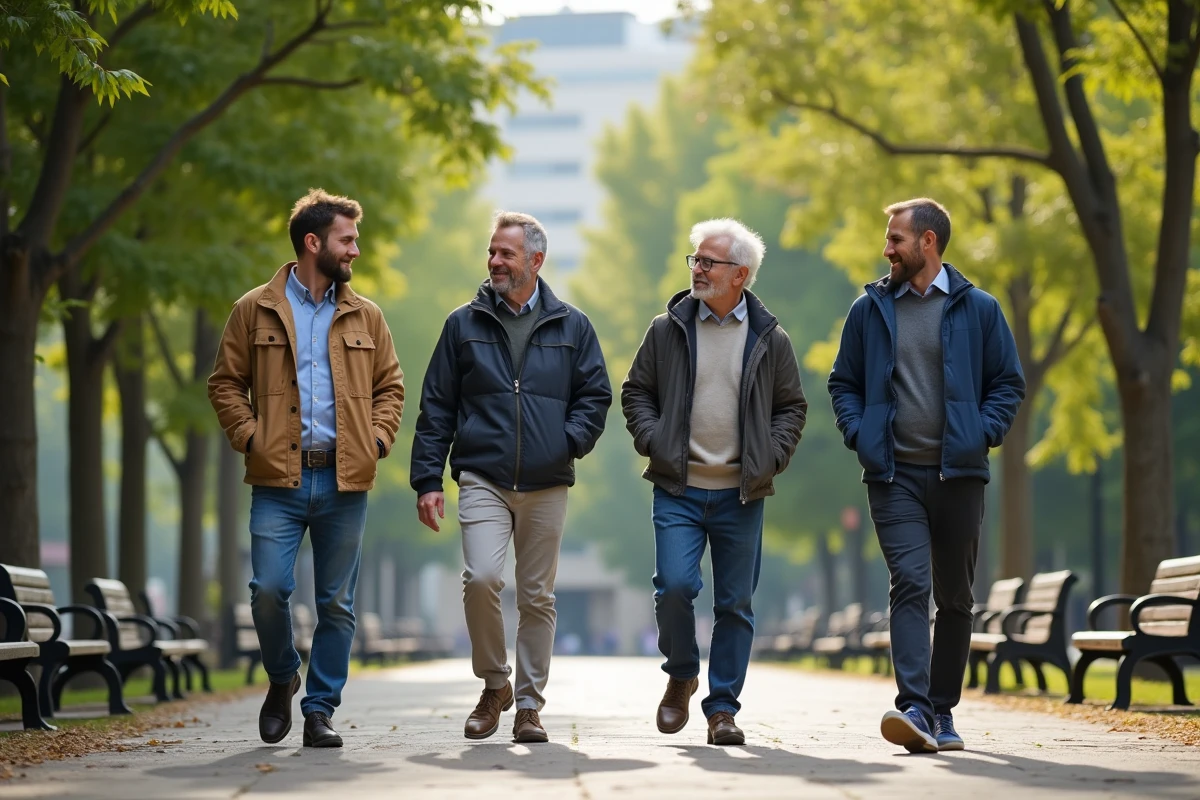
Towards a balance between contemporary expectations and personal fulfillment
Breaking free from assigned roles is no easy task. Many men navigate between the desire for commitment, family questions, and a sincere quest for sustainable well-being. For many, culture imposes itself as a means to breathe: finally saying what remains unsaid elsewhere, or exploring what has no place. N. Gassmann, C. Robert, among others, advocate for a return to art therapy, a field for reconnecting with oneself, outside of ready-made models.
Accessibility remains a significant challenge. It’s no longer just a few insiders benefiting from these resources, but rather about extending their reach. The experience of R. Leroy-Castillo, who brings the humanities into the workplace, reflects this desire to offer everyone a gateway to common meaning and rediscovered collectivity.
In this regard, several concrete paths are emerging today:
- Opening artistic workshops without barriers: no selection, everyone builds their journey according to their needs
- Widely disseminating art therapy and adapted programs, facilitating access for all those who wish to venture into them
- Durably integrating the humanities into curricula and workplaces, renewing the formats of living together
Here, there is no universal recipe. Only human-scale attempts, initiatives that refuse routine, gradually sketching out other contours for masculine identity. The framework stagnates, the escape route is being invented. Everything remains open to those who choose to shift the perspective.