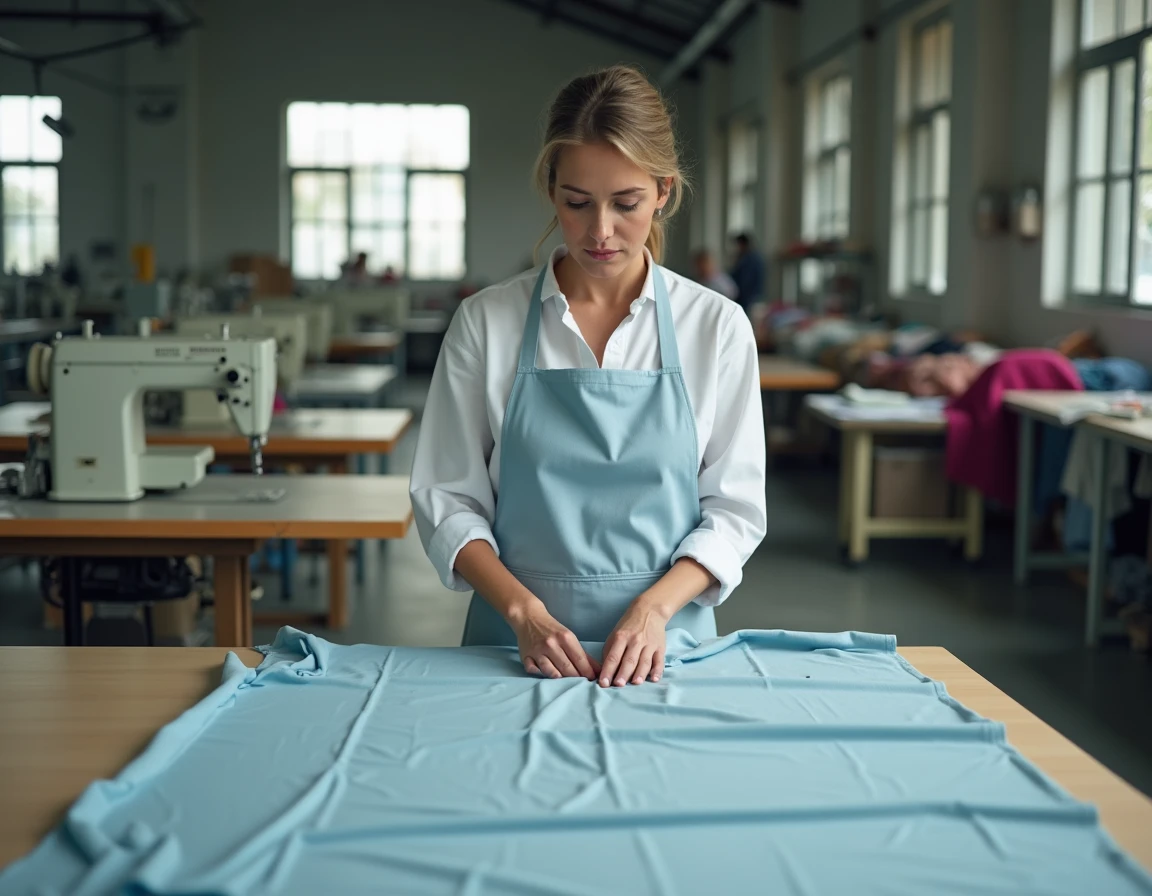
For nearly four decades, Camaïeu specialized in women’s ready-to-wear, targeting women aged 20 to 60.
Its judicial liquidation in September 2022 ended a network of several hundred stores in France and abroad, but the brand itself has survived through recovery projects that raise a fundamental question: where and how to manufacture Camaïeu clothing today?
Textile origin claims: what the DGCCRF has been monitoring since 2022
Before discussing manufacturing, it is essential to understand the legal framework governing any origin claims. Since 2022, the DGCCRF has increased inspections on the origin claims of clothing. Several brands have been sanctioned for displaying a “made in France” label when only a minor production step took place on the territory.
For a garment to legitimately claim French manufacturing, customs regulations require that the “last substantial transformation” must have taken place in France. In practical terms, a simple ironing or final quality control is not sufficient. Weaving, dyeing, cutting, and assembly are the steps that authorities examine to validate a claim.
This regulatory pressure directly impacts any revival project for Camaïeu under the “made in France” banner. The former model of the brand, based on massive volumes and low production costs, did not meet these requirements for precise traceability of weaving, dyeing, sewing, and finishing locations. Anyone taking over the brand with national ambitions must integrate this constraint from the design stage of the collections.
To understand the history of Camaïeu in Noyelles-Godault and the historical link between the brand and northern France, one must go back to the early years of the brand when logistics and style offices were concentrated in the Hauts-de-France region.

Camaïeu’s production model before 2022: distant outsourcing and massive volumes
During its years of operation, Camaïeu functioned like the vast majority of French fast-fashion brands. The overwhelming majority of clothing sold in France is manufactured abroad, and Camaïeu was no exception.
The style office designed the models in France, but the production was outsourced to Southeast Asia, China, and, to a lesser extent, the Mediterranean basin (Tunisia, Morocco, Turkey). This scheme allowed for maintaining low selling prices in a highly competitive women’s ready-to-wear market. The brand held a significant share of the French women’s ready-to-wear market.
Design remained French, but manufacturing did not. This distinction is fundamental to understanding the current promises of reshoring. Designing in France (pattern making, fabric selection, prototyping) and manufacturing in France (cutting, assembly, finishing) are two very different industrial realities in terms of costs and capabilities.
Textile reshoring in France: small series and Mediterranean production
Since the liquidation of Camaïeu, the players who have taken over or reused the brand are part of a broader trend observed in the French textile industry. The logic is no longer that of massive volumes produced in Asia, but rather of small series reshored to Europe or the Mediterranean basin.
This shift responds to several simultaneous constraints:
- The reduction of unsold stock, which has become a moral obligation and soon a regulatory one with anti-waste laws, pushes to produce less but closer
- Delivery times from Asia (several weeks by sea) no longer allow for quick responses to fast market trends
- Portugal, Morocco, and Tunisia offer a compromise between labor costs and geographical proximity, with recognized textile expertise
- French workshops, though few in number, are repositioning themselves in niches of small and medium series with high added value
The revival project for Camaïeu as a “100% made in France” brand relies on a network of national workshops, with production costs higher than the European average. This additional cost necessitates a pricing repositioning that breaks with the brand’s historical DNA: affordable clothing for the greatest number.
Camaïeu made in France: concrete industrial trade-offs
Transforming a fast-fashion brand into a French manufacturing brand is not just about changing suppliers. The French industrial fabric in clothing has significantly reduced since the 1990s. The sewing workshops still active in France are specialized, often small, and already engaged by other brands committed to made in France.
The national production capacity mechanically limits the volumes that can be considered. A project like Camaïeu’s should plan over a decade or more to rebuild an industrial tool capable of meeting significant demand.
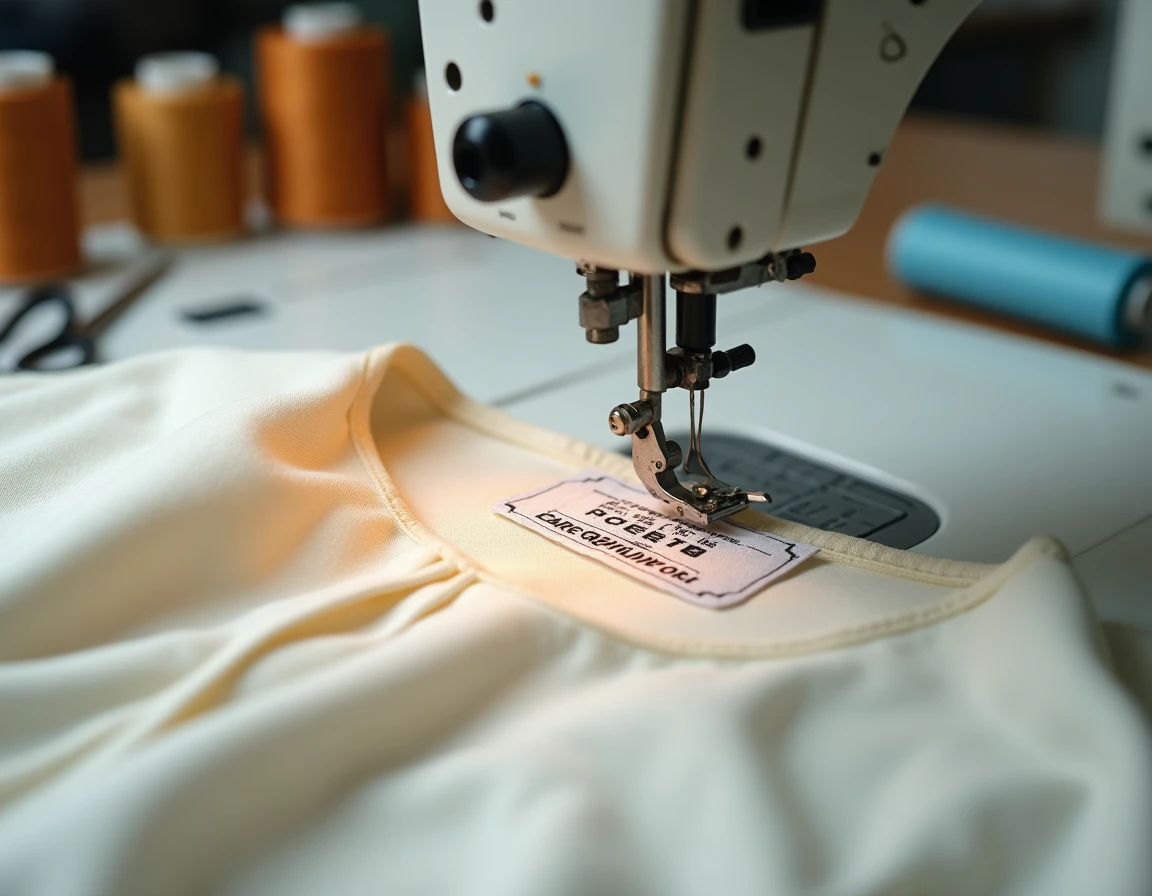
Moreover, each manufacturing step poses a specific sourcing problem. France has spinning mills in the North and Auvergne-Rhône-Alpes, but weaving and dyeing capacities remain limited compared to the needs of a brand with national ambitions. The complete supply chain, from thread to finished garment, involves coordinating geographically dispersed subcontractors, which complicates logistics.
Camaïeu’s bet on French manufacturing remains a long-term industrial project, whose viability depends as much on consumers’ willingness to pay more as on the actual capacity of the territory to absorb these production volumes. The brand that has dressed millions of women at moderate prices will have to convince on a completely different level: that of verifiable transparency and assumed pricing.