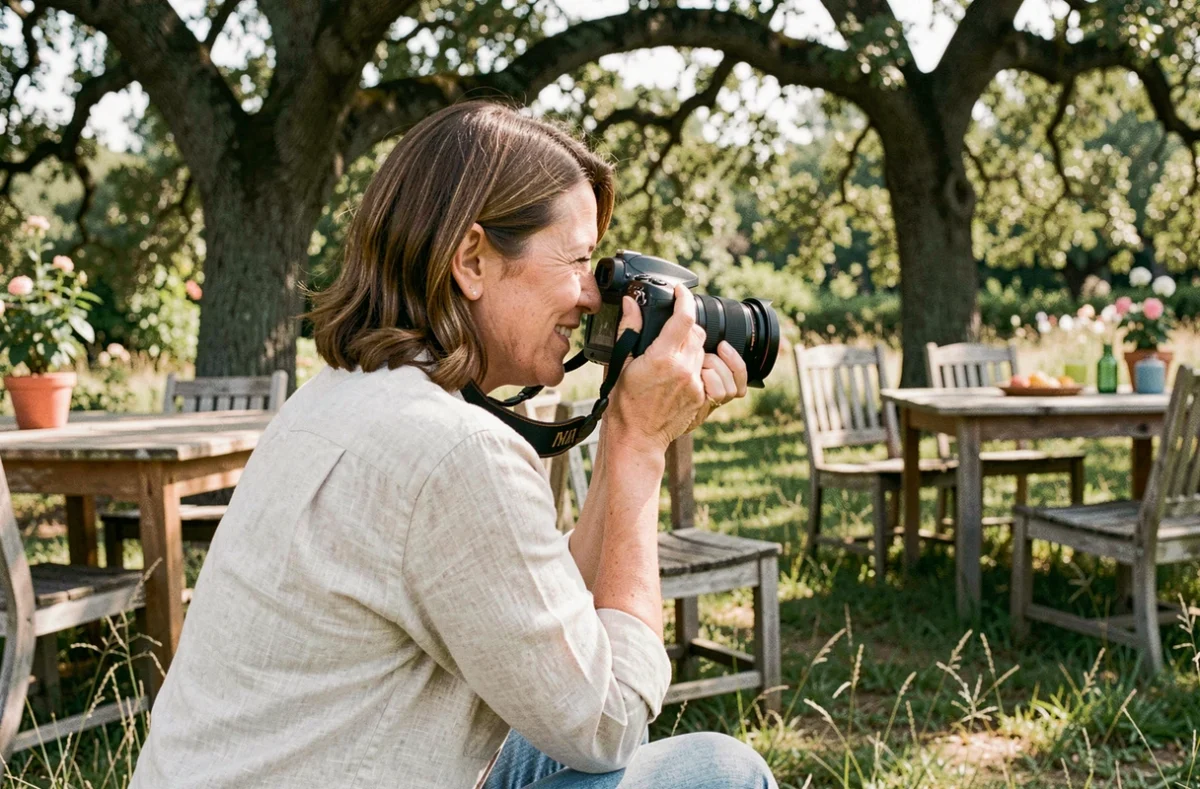
A skilled photographer is not judged by their portfolio alone. A professional’s best images are carefully selected, retouched and showcased on a website. They reveal nothing about their consistency over the course of an entire day, or their ability to handle a major unexpected issue on the day of your event. Choosing a photographer means finding out what happens when things don’t go according to plan.
Full gallery or curated portfolio: what the images don’t show
Have you noticed how similar portfolios often look? Golden light, perfect smiles, carefully styled settings. Every photographer selects their thirty or fifty best photos from several years of work.
The problem is that this showcase says nothing about how well they cover an entire event. A wedding lasts all day. Lighting conditions change, venues come and go, and key moments happen without warning. Ask to see a full gallery from a past event, not just a selection. You’ll see how the photographer handles a ceremony in a dark indoor setting, a drinks reception in bright sunshine, and an evening of dancing under artificial lights.
A professional who refuses to share a complete gallery (with their former clients’ permission) gives you reason to ask the next question: what is the rest of the coverage hiding? Consistency over a ten-hour day matters just as much as the quality of a single shot. Photographers such as those featured on https://eyes-wide-shoot.be showcase work that gives you an idea of the results over time.

Photographer contract: replacement clauses and file ownership
What happens if your photographer falls ill on the morning of your wedding? The question may seem like a minor detail when you sign. It becomes crucial as the event approaches.
The replacement clause
A solid contract specifies what happens if the photographer is unable to attend. Some professionals work within a network and name a replacement in advance. Others make no provision, leaving you without recourse on the eve of the ceremony. Check whether the contract names a replacement photographer or at least describes the replacement procedure.
Who owns the files and permissions
If a replacement steps in, they produce their own images. The copyright belongs to them, not to the photographer you originally hired. The contract should specify who keeps the files, what format they will be delivered in, and how long a backup copy will be stored.
Another often-overlooked point concerns publication permissions for the people photographed. The permission you give the photographer to publish your images on their website does not automatically cover guests who can be recognized in the photos. If the photographer changes on the day, these permissions need to be renegotiated. A comprehensive contract distinguishes between the photographer’s rights (as the author) and the rights of the people depicted.
Photo retouching and artificial intelligence: set boundaries before the shoot
Artificial intelligence tools are becoming increasingly common in photo-editing software. They speed up image selection, correct exposure and adjust colors. Some go further, removing elements from the background, changing expressions or heavily smoothing faces.
Agree before the shoot on what will and won’t be retouched. Technical corrections (exposure, white balance, cropping) are standard practice. Changes that alter the scene being depicted are a different matter. Replacing a background, removing a person or turning a gray sky into a sunset are all edits worth discussing explicitly.
Why does this matter so much? Because your photos are memories. If they no longer reflect what actually happened, they lose their documentary value. Ask a simple question: what tools do you use for retouching, and how far do you go?
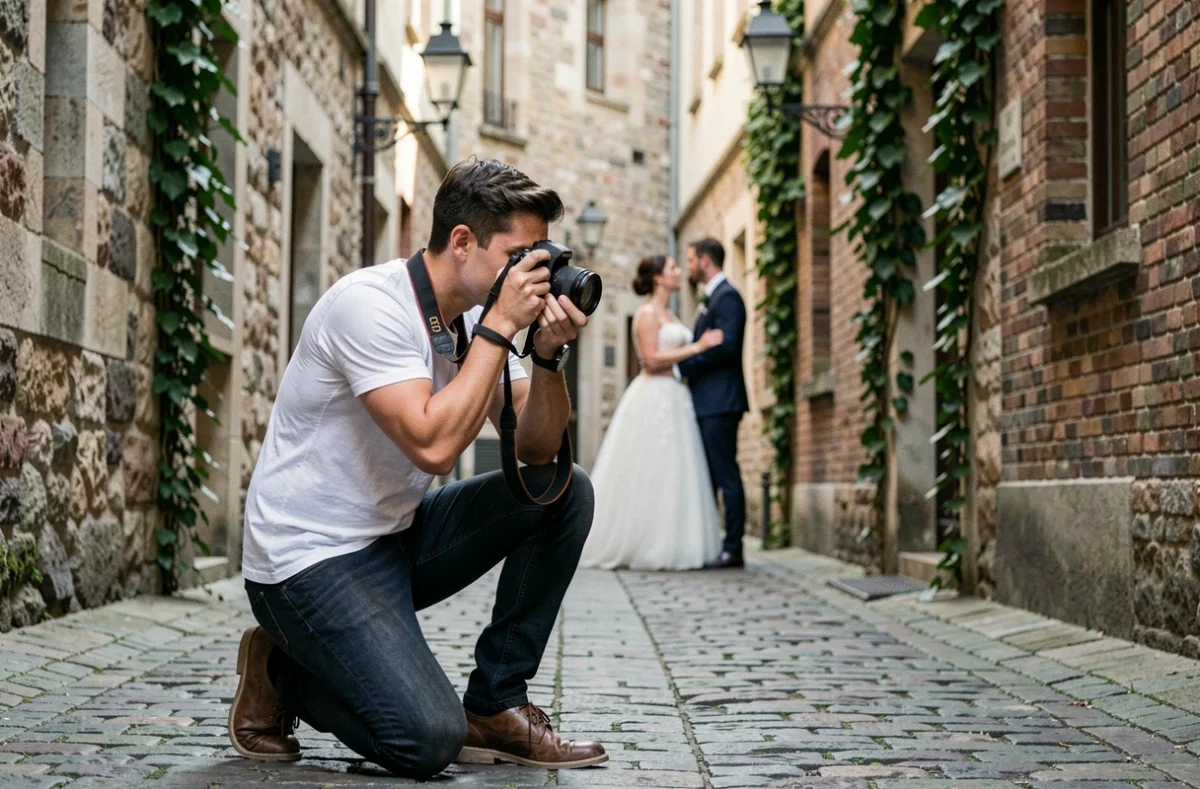
Practical criteria for comparing two photographers
Beyond visual style, several concrete factors can help you choose between two professionals. Comparing them systematically helps you avoid making a decision based on an aesthetic first impression that doesn’t hold up to logistical realities.
- Delivery time and storage period: some photographers deliver within a few weeks, while others take several months. The contract should also state how long the online gallery will remain accessible and how long the professional will keep a backup copy.
- Number of photos delivered and file format: will you receive high-resolution files suitable for large-format prints, or only compressed images for the web? You’ll notice the difference when you print an album.
- Cancellation and rescheduling terms: a wedding may need to be postponed for reasons beyond your control. The rescheduling terms (with or without additional fees) and refund conditions in the event of cancellation should be clearly stated in writing.
- Whether a second photographer or assistant will be present: at a large event, one photographer cannot cover the couple’s preparations in two different locations at the same time. Knowing whether an assistant is included affects how the day will be covered.
These criteria don’t replace the human connection. Meeting the photographer in person or over video is still useful for assessing how they communicate and whether they can put you at ease. A good photographer asks about your day before talking about their work.
Your final choice comes down to balancing the quality of the work you can see, the strength of the contractual terms and the trust you build with the photographer. A professional who delivers beautiful images but refuses to put contingency or retouching terms in writing leaves you exposed to unpleasant surprises that may not come to light until after the event.