A territory of 19 villages, 140 km² of countryside and forests, and a visitor rate per inhabitant that defies regional statistics: the Community of Communes of the Pays de la Petite Pierre shakes up the standards. Nestled in the heart of the Vosges du Nord Regional Natural Park, it combines a strong cultural identity with a long-standing commitment to preserving its heritage.
Here, community life is not just about being present. It brings energy, keeps traditions alive, and allows access to historically rich sites that are often closed elsewhere. This is thanks to bold public policies that have shaped a tourist offer as varied as it is refined, suited to both families and explorers in search of the unusual.
A territory with a rich past: history and identity of the Pays de la Petite Pierre
Since antiquity, the territory of La Petite-Pierre has sparked desires and has constantly changed hands. Rooted in the heart of Bas-Rhin, the municipality, called Parva Petra during the Roman Empire, and later Lützelstein through the Germanic centuries, occupies a key position between Lorraine and the Rhine plain. The castle that stands on the rocky spur testifies to this: almost every era has reshaped, modernized, or fortified it. After Georges-Jean de Veldenz, it was the engineers of Vauban who left their strategic mark at the request of Louis XIV.
Transformations, alliances, and conquests form a continuous thread. Once a county, then a principality sometimes turned into a political bargaining chip, La Petite-Pierre has come under the influence of palatine families, the county of Blieskastel, and even Anne-Marie of Sweden and Gustave Wasa. Borders waltz according to treaties. By intertwining, they create an atypical identity where the French spirit meets Germanic culture.
This tumultuous past is not relegated to a museum. It permeates all community action today. For those wanting to grasp the major milestones of this history, its emblematic monuments, or the economic evolution that began in the 16th century, whether it concerns glassworks, forges, or forestry, the reference remains the site cc-paysdelapetitepierre.fr. There is a direct bridge to this border territory, forged at the crossroads of empires, bishoprics, and the Kingdom of France.
What cultural and natural treasures to discover during your visit?
Among the lands of the Vosges du Nord Regional Natural Park, the Community of Communes of the Pays de la Petite Pierre stands out for the strength of its heritage and the diversity of its landscapes. It is hard to ignore the castle of La Petite-Pierre, proudly perched on its rock, which now houses the headquarters of the natural park. Ramparts, cisterns, casemates: each stone tells its defensive function, while the Maison des Païens, built in 1534, now hosts contemporary art exhibitions that engage with the memory of the place.
The historic village, the Staedtel, unfolds its network of alleys, animated by picturesque architecture typical of the region. There, the Gothic austerity of the Church of the Assumption coexists with the discreetly nestled Saint-Louis chapel on the forest’s edge, two classified monuments that rival the major sites of French heritage.
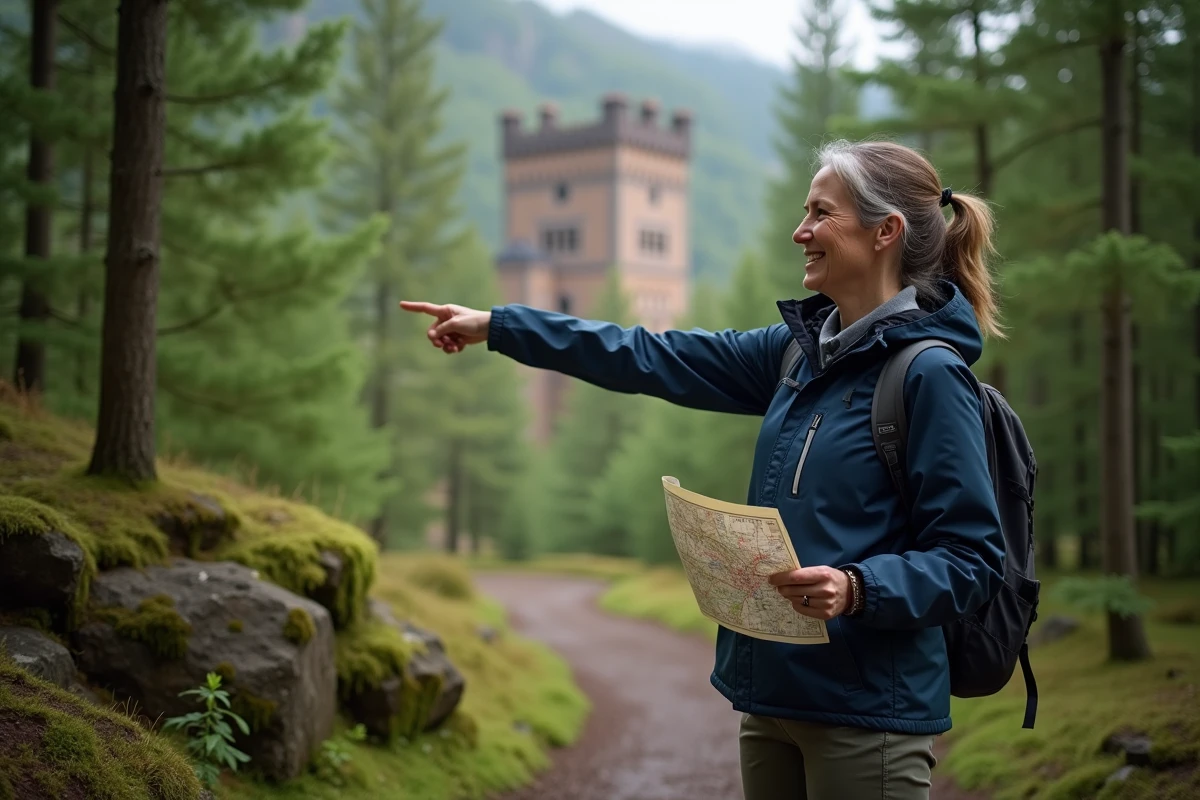
Outside, nature takes over. The deep forests host wildlife, from deer to the rare lynx, and the paths follow ancient Roman roads like the Via Bassoniaca, while leading to protected areas: hunting and fishing reserves, Natura 2000 trails, and the Bastberg regional nature reserve. Here, the preservation of biodiversity is embodied at every step, through the care of the inhabitants and the enduring forestry tradition. Every path bears traces of the past, and each clearing opens a page of the present.
Preparing your stay: access, accommodations, and practical tips for exploring the region
The village of La Petite-Pierre is part of a network of 38 municipalities, united within the community of communes of Hanau-La Petite Pierre. Accessing the area is straightforward: the A4 motorway quickly connects Strasbourg, Paris, and Germany, while the TER lines Strasbourg/Sarreguemines and Haguenau/Saverne cover the entire rural zone. For those coming from further away, the airports of Strasbourg and Baden-Baden greatly facilitate arrival. The whole area naturally integrates into the Rhine axis where Luxembourg, Basel, and Brussels are also located.
The intercommunal tourist office of Hanau La Petite-Pierre aims to be the logistical ally of your stay. It lists a wide range of accommodations: small hotels, characterful lodges deep in the forest, and guest rooms in the heart of the villages. This diversity guarantees a warm and authentic welcome, whether you are traveling alone, as a couple, or with family.
To make the most of the experience, here are some suggestions to explore:
- Take the marked trails by the Club Vosgien, on foot or by bike, to vary your immersion in the landscapes.
- Enjoy local dishes in village restaurants to experience local flavors at the table.
- Join cultural events that punctuate the seasons and promise real discoveries.
Throughout the year, the inhabitants, known as Parva-Pétriciens, tirelessly keep the region alive. They innovate in energy transition, actively protect their natural environment, and participate in the collective management of this corner of Alsace. For practical information, find all useful details directly at the tourist office or on cc-paysdelapetitepierre.fr. Stopping over or settling in the Pays de la Petite Pierre means choosing a place where the present is built in harmony with the stone, the forest… and a history that, indeed, never rests.